
I have just read this amazing book – “Borders & Belonging” by Pádraig Ó Tuama and Glenn Jordan. It is about the book of Ruth and how it relates to our times. Our times being Brexit and, because they are both Irish, about the border between northern and southern Ireland. But for me it meant so much more.
They talk about how the story of Ruth tells how the law was changed through the actions of Ruth, which to me means God is saying that these “rules” we read in the Bible are not set in stone. The book of Ruth is read by the Jewish people every Shavuot, which corresponds with the Christian festival of Pentecost. Shavuot celebrates the spring harvest and comes 50 days after Passover. Pentecost celebrates the coming of the Holy Spirit to all people. Each year Jewish people remember, as well as the blessing of the spring harvest – which all who are gardeners know is so important as it comes at the end of the “hunger gap”, the time when there are just boring root veg that has survived over the winter – also remember this young woman from a despised tribe coming to their town and being accepted into their lineage and changing what was written in the Torah, which said that a Moabite cannot enter the nation of Israel. Yet at the end of her story we read that Ruth’s descendant is King David.
I think this is why she is included in Jesus’ lineage at the start of the Gospel Matthew – to show that Jesus came to remind us all that the law is not static, and I also think one of the reasons the Holy Spirit came on Shavuot is to show that again the law is not a static thing; that to follow God is not all about rules to follow but about grace and kindness.
As it says towards the end of “Borders & Belonging” “kindness is not constrained by rules” and that the law and traditions changed so that “kindness and grace is extended.” But how often are the “rules of Christianity” so fixed that kindness and grace are excluded? How many times have those in the LGBTQ community being told they are wrong and need healing? Or the young heterosexual couple who cannot afford to get married are told that they are wrong for wanting to live together? How many people feel they have to “clean up their act” before they can follow God?
How often do we, as church, hold on to the laws and traditions of our community because we think that is the right thing to do? When Boaz met with a man in front of the village elders who had, according to the Law, a stronger claim on the land that belonged to Ruth’s late husband, this unnamed man was willing to let go of that because he was afraid that his children would be outcasts as they could have been looked at as half Moabite, the despised tribe. As Pádraig says he was “willing to be poorer in order to be purer”. How often we do that – follow the right way but miss out on a bigger blessing because we weren’t able to share kindness and grace?
Interestingly around reading this I was on a long car journey and listened to a series of podcasts from Orphan No More, a community of Christians based in Bath, which were loosely based around the question of “do I have enough?”
Unless we can believe that we have “enough” I believe we cannot walk in kindness and grace. Am I willing to believe I have enough? Are you willing to believe it? Are we willing, during this Eastertide season to learn to walk more like Jesus – in kindness and grace?


 I wonder how the followers of Jesus felt as they woke after Passover. Not the 12 disciples or the women who stayed with him. We know what went on with them. I wonder about those, who are like so many of us, sitting on the edges, are not part of the inner clique. Those who had heard Jesus speak, had felt something stir in their hearts, stayed with him even when they didn’t get picked to be the elite disciples. Those who shouted “Hosanna!” the Sunday previously and who stood at the back of the crowd when others shouted “Crucify him” and felt helpless to do anything about it. How did they feel?
 Before Christmas I shared my thoughts on encouraging each other. This is an ongoing thing for all of us. I am a natural encourager but as another encourager friend said “who encourages the encouragers?” Well we encouragers do all have to learn that not everyone is an encourager. Some people have other skills and gifting which we all need. You notice here as an encourager I find it hard to list them 🙂
 qualifiable tasks to begin with – planning and advertising writing workshops, and cleaning. Yes those were the only ones on my list I got to. I have a great writing project in my head that I need to plan out but I am struggling with it. I have reached a point where I know I am rubbish and it will not get off the ground!! See need of encouragement.
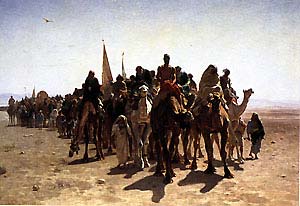 There are 12 verses in the second chapter of in the gospel of Matthew that talk about what happened with them but all we are told about them is “Magi from the east came“, they go to visit King Herod because they know that this is where a king should be found, get told by his advisers that a prophecy says the ‘King of the Jews will be born in Bethlehem’, they go and visit Jesus and then don’t go back to see Herod. From these 250-300 words, depending on translation, the Christian faith has made up a whole mythology about these “Magi” that is now believed.
 they go to visit a new born king? I think it was because the stars foretold how great this King was. Why go and visit a great king? To get great gifts from him. I believe these Magi had money, either of their own or were in a position to tax the people around where they lived. I think they came in a huge caravan of camels and servants and tents and gifts. Why do I think this? Because everything I’ve read about King Herod is that he was a despot and would not have let in three lowly travellers even if they did say they were off to worship the new king. I believe, from all I have read about Herod, that he would have either dismissed them or had them killed. But he welcomes them in. They must have been an impressive sight and he must have known he couldn’t silence them. I believe they came with gifts, not just the gold, frankincense and myrrh that are mention, but much more. I believe the Bible only mentions those three gifts because they are the significant ones. I do believe that the Bible misses many details out. Why say that they gave other things when Matthew wanted to make a point to his readers of who Jesus is?
 message Chris, the previous owner and ask if he can tell us where drain is. Chris appears as Mark has located drain. Both of them are down the drain. Husband is on his way home and I have to go to run workshop. So leave ex-owner and friend I haven’t seen in nearly a year under my sink pushing broom handles down drain. Turns out there were huge lumps of fat and gunk and all sorts in there which all 3 men spent time pulling out until all was clear. When the girl on the water board switchboard phoned the following day to see how things were, because they do follow up calls even if they haven’t done anything, she said it was the loveliest story she’d heard and was glad she’d phoned to find out about how things were. Lovely story of cooperation. Good from bad 🙂
 the scum off the street“. But the question is where does that scum go? Well from our street it went up our drain.
 2012 I wrote in the front of my diary on 1st January “let this be the year when things come into the light” and have blogged on it (though cannot now find the blog!). It was the year my sister’s and two friend’s mental health problems came “into the light” and we had to deal with their deaths. Bringing things into the light is dangerous especially when we live in a society that doesn’t like people to be open and honest. Chatting with one of our guests the other day we reach the conclusion that one of the most important life skills schools and parents could be teaching their children is how to be honest about what they think and feel and how to express that clearly and calmly. Usually by the time one gets to the point of needing to talk the “calm” has moved on to anger and frustration. But even to be able to say “I am angry and frustrated” should be able to be done in a calm manner.
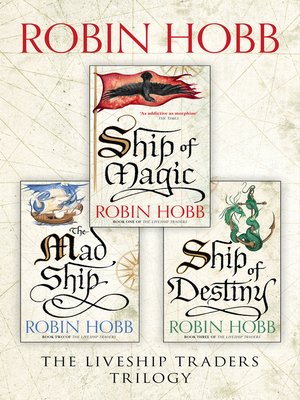 8-900 pages long. So for the last month I suppose I have been hanging out with these characters and so I am missing them today. The trilogy is The Liveship Traders by Robin Hobb. Well worth giving a month to.
 that pain it gives us resurrection. According to the Anglican and Catholic church calendars we are in that period between Easter and Pentecost and it is a time to reflect on resurrection. I was at a wedding of my dear friend who’s first husband committed suicide and during her talk the vicar said that this was my friend and her new husband’s resurrection time and that it was significant that they were marrying just after Easter. It’s true. She can now give her pain to Jesus, keep her memories of her first husband, but open up into the new life she has said yes to. And yes I weep through writing this because I have my own pain with it too. I can only give my own pain to Jesus again and again. I will still have the memories not only of the times when he was alive and the crazy things we all did together but also the memories of the fateful day and the aftermath of it. But they can be viewed as memories and a constant giving to Jesus of the pain.
 Jesus said we were meant to be “in the world but not of the world” which sort of, to me, means that we are to be rebellious to the things that the world can take for granted – like putting self first, wanting for us, fear, anxiety, etc. I am not going to put down Christians who worry or are anxious because I know way too many who really are amazing followers of Jesus but who do worry, suffer from anxiety and from depression, have to deal with fear on a regular basis. But I also see these many of these people fighting it all the way. They don’t lie down to the fact that they suffer with these things but they work toward it not happening. I also see this in people who are not followers of God too, who will not let these things overwhelm them even if they are bed-bound, taking tablets, struggling. They are rebelling all the way against these things.
 others and ourselves from reaching our potential. I suppose it is why I want to encourage others with using words for well-being. I want to show how this can be a tool to help rebel against the world.
 need to encourage my fellow Christians, with the tools I have – which is my writing – to think about how they look at others, to be welcoming, to not fear, to be supportive, to be counter-cultural. Sometimes I think there are more people who do not attend church and are not followers of God who are more counter-cultural than Christians. Many are out there feeding people not just over Christmas by all year, are working on ways to support others, to share news openly of the good as well as the bad that goes on, who have time to stop and chat to the old, the lonely, the smelly and the sick.
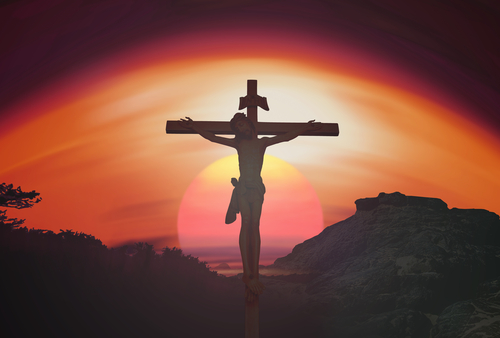 So when Jesus gets crucified the Bible says that Pilate put up a plaque above Jesus on the cross that said “King of the Jews” and the Jewish leaders who wanted him crucified for this very reason got really angry with Pilate and wanted him to take it down. I’d always thought all that was odd. The reason the Jewish leaders had bullied Pilate into crucifying Jesus was because he had declared himself as king, so they said and “they had no other king than Caesar” is what they said. So why get mad about what was there? But also why did Pilate have that plaque put up anyway?
 special punishment in Roman times but was something they did quite a bit and then they would leave the crucified person there for ages as an example. A bit like we use to do over here and leave the condemned man hanging on the gibbet at the crossroads or in a cage on the side of the city walls, or heads on poles from Tower Bridge. That sort of thing. As an example. And to be a good example it was good to remind people what the crimes were that could get you crucified.
 festival. Amazing!
