
The liturgy for yesterday morning was 2 Corinthians 5:14-17 [the new creation passage] with Dave Bilbrough’s I am a new creation and the sermon with the caterpillar to butterfly analogy all thrown into Sunday morning.
But I got to chewing this over. Do we really emerge from caterpillar to chrysalis to butterfly and that’s it? What happens to those who back slide, loose faith, etc etc? Do they just “die” and that’s it? And what about those people who say they are Christians but don’t quite look like new creations. I know the me of 30 years ago isn’t the me of now but I didn’t change instantly. I am very much a work in progress.
So anyway we got to chewing over this verse – which I think we all should be doing rather than just accepting the interpretation of the person at the front or some book or blog we read.
The NRSV version that our church uses says
From now on, therefore, we regard no one from a human point of view; even though we once knew Christ from a human point of view., we know him no longer in that way. So if anyone is in Christ, there is a new creation: everything old has passed away; see, everything has become new!
Not “you are a new creation” but “there is a new creation”. We no longer look from a human point of view but from the point of view of Christ. And Christ Jesus looks at us with no condemnation, no fear, no anxiety. He doesn’t look at us as if we are an issue, a problem that needs solving or sorting. He looks at us with unconditional love.
So this go me thinking – especially as we approach election time – as how do I look at the political situation in my town, my country, my world? At the education system, the health system, the emergency services, the welfare state, etc, etc, etc? The ecology system, global warming, pollution, etc?
I have to say that more and more I am learning to look at my fellow humans as people that I need to learn to love unconditionally and not problems that need solving or people I need to judge – however kindly that might seem at times.
Talking of people – in the park yesterday someone showed me how looking at someone in Christ was. Now I don’t know where this fellow dog walker is with God but we all walked passed this person sat on the bench drinking a can of beer at 8am. Some of us nodded but some walked on without noticing him. This fellow dog walker stopped chatted to him, noticed he had a swollen arm and suggest ways he could help himself. When I said something about getting this drinker to hospital the dog-walker said how this man had to choose for himself. He made me see this other man as a human being with choices he could make and not an issue that needed sorting.
Henri Nouwen’s says
Let us not underestimate how hard it is to be compassionate. Compassion is hard because it requires the inner disposition to go with others to the place where they are weak, vulnerable, lonely, and broken. But this is not our spontaneous response to suffering.
What we desire most is to do away with suffering by fleeing from it or finding a quick cure for it. As busy, active, relevant [people], we want to earn our bread by making a real contribution. This means first and foremost doing something to show that our presence makes a difference.
And so we ignore our greatest gift, which is our ability to enter into solidarity with those who suffer. . . .
Those who can sit with their fellow man, not knowing what to say but knowing that they should be there, can bring new life into a dying heart. Those who are not afraid to hold a hand in gratitude, to shed tears of grief, and to let a sigh of distress arise straight from the heart can break through paralyzing boundaries and witness the birth of a new fellowship, the fellowship of the broken.
Note the highlighted in bold part!
But finding a quick cure is not “being in Christ” but is being in self. So to be “in Christ” we all need to be seeing our fellow man and our world through the eyes of new creation. Nothing changes but the way we look at things.
For instance have you ever been somewhere and before you’ve gone you’ve thought “this is going to be hard work and I know I’m not going to like it” and guess what? Yup it is hard work and you didn’t enjoy it. But what happens if you say “I do find these situation hard but I want to go and I want to enjoy it and I want to flourish and see others flourish”. Guess what? You go and you have a good time and something good comes from it. Etc, etc.
When we look through the eyes of Christ, the eyes of God, which is what I think “in Christ” means – looking through Christ/God’s eyes and heart, then we see the whole world and everything in it with unconditional love. That doesn’t mean it is perfect. That doesn’t mean we should just let it be. But it means we can look with love and compassion not at a problem needing fixing.
Like I say I am getting better at doing this with people but with the bigger things like climate change, people trafficking, our crazy political leaders – national and international, our health care, education, welfare, etc I am still working on.
I am a work in progress but my heart is to learn to burrow deeper and deeper into Christ so I can see with their eyes that “the old has passed away” and be able to exclaim “see everything has become new!”



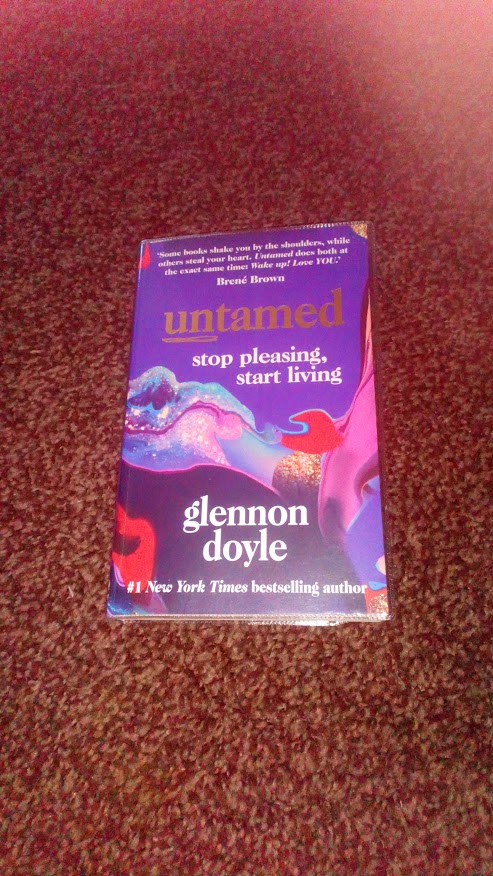
 Ok so picture this – you’ve been sent to go and do some huge task that you don’t want to do. I think we often hear this in our childhood or teens. But it is so huge we runaway. I know I ran away into was drink, drugs, etc. Other people can runaway in a calmer, more acceptable fashion. In the running away you get to a place where others throw you overboard (we’re on the Jonah on the ship now) and you get swallowed up by something that you know has saved your life. Ok it isn’t great inside the whale but it is safe, you are going nowhere, you’ve got enough to eat, you aren’t doing yourself or anyone else any harm. You’re even wondering if you could live the rest of your life in that dull, dark place.
 stay by the dead, safe place and live off it as it rots, or[3] we can take some of the dead meat with us. With the last two options we will be living off dead and decaying meat. Stinking flesh. Rotting flesh. We need to leave the dead behind and move on into the unknown.
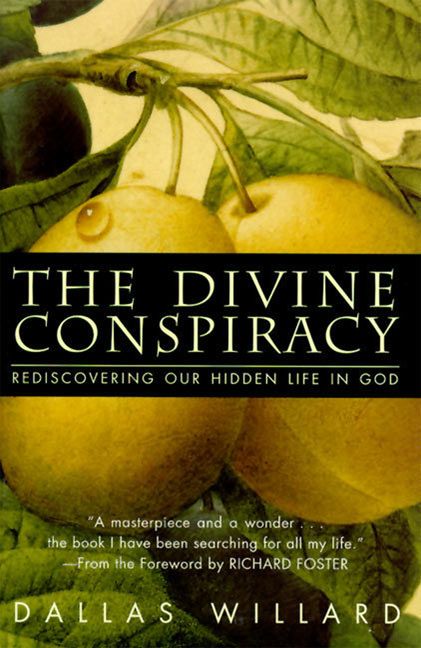 sharing this book on his Instagram ages ago) This quote from Jan’s course jumped out at me because it fits in so much with what I am reading at the moment that Willard is saying the problem with Christianity is. (Note I am only on page 77 at the moment 🙂 )
 and even alcohol. It lasted five days before I decided that I needed to finish the elderflower presse off with the gin liquor my daughter had given me. It was a week before I decided to use the cheese that was in the fridge for a meal, to use up the mushrooms that were lurking in the vegetable rack with the turkey that was sitting in the bottom of the freezer. Why couldn’t I do it? Because I was doing it as an “ought” rather than it being something my innermost being wanted to do. And the funny thing is that we generally only eat meat once or twice a week, drink wine only on a weekend, and only have spirits on special occasions! It was in the telling myself I couldn’t that I wanted to. When it is just a part of my life – I suppose part of my innermost being – then it is easy.
 So I think we need to stop telling people that Jesus lets us see a meaning to life, or even telling people they don’t know the meaning of life but help to show them the bits of Jesus life that help us all to find true connection with our innermost being and truly bring us alive. And to be honest I don’t want to hangout with a God that doesn’t do that for me
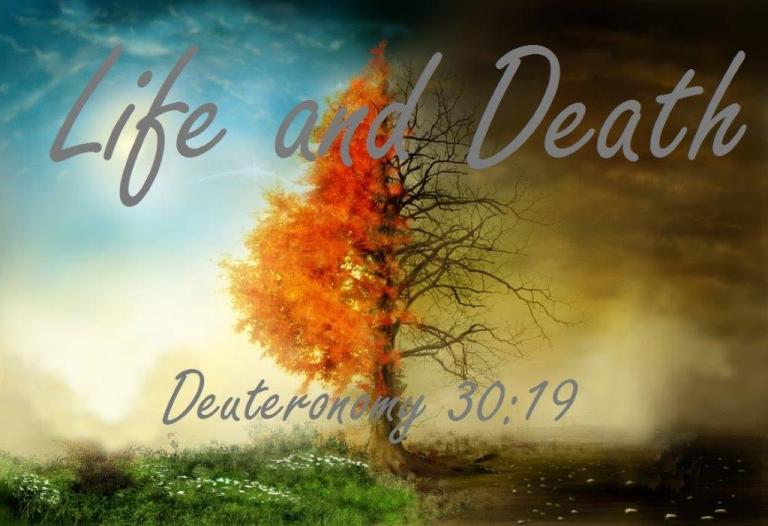 lot, it seems, in the Old Testament about whether to choose death or life, blessing or curse and I must admit I never quite got it. I was a bit like “why would you choose death or curse? Surely everyone chooses life and blessing!” But I know a lot of people who will look to the negative – the family visit and list all that could go wrong, the day out in the sunshine waiting for the rain, etc. I never realised until today when I was doing my “mindfulness” stuff of looking at the good things in my life – my blessings – that it is about attitude as much as what we do. So today I’m not going to steal anything, murder anyone, covert anything, hopefully not use God’s name in vain, etc, but I could very easily slip into the negative thinking.
 together. I could very easily be dreading catching the train, worrying that he’ll be late, being nervous as to what they are going to be doing with pancakes, anxious about going and doing something I’ve not done before. I have a choice. Do I want life and so be looking forward to it and seeing it all as a blessing, or do I choose negativity and death and spend my whole day under a curse?
 will be real and honest about them – like the catching the train tonight. If I don’t catch it I won’t get there. I will have to eat and walk the dog beforehand and I do find having set times to do things in my life isn’t what my personality enjoys. So I know it will be hard but I can choose to look at the things I don’t like or I can choose to focus on the good.
 about that thing inside of you, that part of you that is alive. Your soul? Your spirit? I’m not sure what it is called but it is that part of each of us that either draws or repels others. Today I chose life.
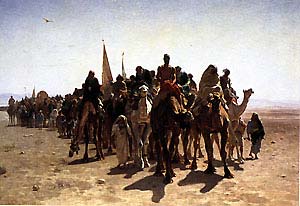 There are 12 verses in the second chapter of in the gospel of Matthew that talk about what happened with them but all we are told about them is “Magi from the east came“, they go to visit King Herod because they know that this is where a king should be found, get told by his advisers that a prophecy says the ‘King of the Jews will be born in Bethlehem’, they go and visit Jesus and then don’t go back to see Herod. From these 250-300 words, depending on translation, the Christian faith has made up a whole mythology about these “Magi” that is now believed.
 they go to visit a new born king? I think it was because the stars foretold how great this King was. Why go and visit a great king? To get great gifts from him. I believe these Magi had money, either of their own or were in a position to tax the people around where they lived. I think they came in a huge caravan of camels and servants and tents and gifts. Why do I think this? Because everything I’ve read about King Herod is that he was a despot and would not have let in three lowly travellers even if they did say they were off to worship the new king. I believe, from all I have read about Herod, that he would have either dismissed them or had them killed. But he welcomes them in. They must have been an impressive sight and he must have known he couldn’t silence them. I believe they came with gifts, not just the gold, frankincense and myrrh that are mention, but much more. I believe the Bible only mentions those three gifts because they are the significant ones. I do believe that the Bible misses many details out. Why say that they gave other things when Matthew wanted to make a point to his readers of who Jesus is?
 Aspirational Adventures