Yesterday I was involved in two Epiphany services and it got me thinking about those “Wise men” who journeyed to see the baby Jesus.
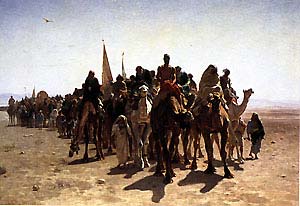 There are 12 verses in the second chapter of in the gospel of Matthew that talk about what happened with them but all we are told about them is “Magi from the east came“, they go to visit King Herod because they know that this is where a king should be found, get told by his advisers that a prophecy says the ‘King of the Jews will be born in Bethlehem’, they go and visit Jesus and then don’t go back to see Herod. From these 250-300 words, depending on translation, the Christian faith has made up a whole mythology about these “Magi” that is now believed.
Because they brought three gifts then it has been decided that there were only three of them. Because we want them to be kind and humble people we talk of what it cost them to travel from wherever to see this babe. All through I feel we have dumbed them down, turned them into something tame and weak. So these are my thoughts on the Magi.
So they must either have been astronomers or astrologers or both or employed people who looked at and read what was written in the stars. That is almost a given. But why did  they go to visit a new born king? I think it was because the stars foretold how great this King was. Why go and visit a great king? To get great gifts from him. I believe these Magi had money, either of their own or were in a position to tax the people around where they lived. I think they came in a huge caravan of camels and servants and tents and gifts. Why do I think this? Because everything I’ve read about King Herod is that he was a despot and would not have let in three lowly travellers even if they did say they were off to worship the new king. I believe, from all I have read about Herod, that he would have either dismissed them or had them killed. But he welcomes them in. They must have been an impressive sight and he must have known he couldn’t silence them. I believe they came with gifts, not just the gold, frankincense and myrrh that are mention, but much more. I believe the Bible only mentions those three gifts because they are the significant ones. I do believe that the Bible misses many details out. Why say that they gave other things when Matthew wanted to make a point to his readers of who Jesus is?
But you know I think the most amazing thing that happens is when the Magi meet with Jesus. So picture a huge caravan of camels, of opulence, of power, coming to the house where Mary, Joseph and Jesus are staying. Here I believe it was the same house that Jesus was born in (as in he was born in the place where the animals lived) and that many of the wider family had no left after the census and Joseph was waiting for Mary to be strong enough so they could leave. Maybe even God had told him to stay and we just aren’t told that by any of the gospel writers.
So here they are in this little town when this cavalcade comes through. The town is in up roar. The Magi reach the house. They go in. There they see a normal couple. Remember Joseph was a tradesman and so wouldn’t be poor but wouldn’t be rich. Normal. But something happens to these wealthy, powerful men when they see Jesus.
Matthew says “ On coming to the house, they saw the child with his mother Mary, and they bowed down and worshipped him. Then they opened their treasures and presented him with gifts of gold, frankincense and myrrh.”
What happened to make them bow down and worship this woman and child? What did they see? What happened? Something in meeting with Jesus caused them to change.
Now I’m sure Herod offered them something to come back and tell him when they had found the child but they don’t. They set off. I’m thinking they went quite quickly because Herod doesn’t chase after them but goes off to kill those poor toddlers in Bethlehem.
I just feel that on this day after Epiphany Sunday it would be good to just ponder what happened when the Magi saw Jesus that caused a change in them. And also how often we have preconceived ideas of what “King Jesus” is like but if we truly looked at Him then we would give him the gifts we had intended for another.
 message Chris, the previous owner and ask if he can tell us where drain is. Chris appears as Mark has located drain. Both of them are down the drain. Husband is on his way home and I have to go to run workshop. So leave ex-owner and friend I haven’t seen in nearly a year under my sink pushing broom handles down drain. Turns out there were huge lumps of fat and gunk and all sorts in there which all 3 men spent time pulling out until all was clear. When the girl on the water board switchboard phoned the following day to see how things were, because they do follow up calls even if they haven’t done anything, she said it was the loveliest story she’d heard and was glad she’d phoned to find out about how things were. Lovely story of cooperation. Good from bad 🙂
 the scum off the street“. But the question is where does that scum go? Well from our street it went up our drain.
 2012 I wrote in the front of my diary on 1st January “let this be the year when things come into the light” and have blogged on it (though cannot now find the blog!). It was the year my sister’s and two friend’s mental health problems came “into the light” and we had to deal with their deaths. Bringing things into the light is dangerous especially when we live in a society that doesn’t like people to be open and honest. Chatting with one of our guests the other day we reach the conclusion that one of the most important life skills schools and parents could be teaching their children is how to be honest about what they think and feel and how to express that clearly and calmly. Usually by the time one gets to the point of needing to talk the “calm” has moved on to anger and frustration. But even to be able to say “I am angry and frustrated” should be able to be done in a calm manner.
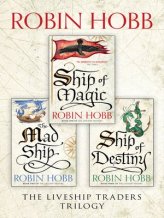 8-900 pages long. So for the last month I suppose I have been hanging out with these characters and so I am missing them today. The trilogy is The Liveship Traders by Robin Hobb. Well worth giving a month to.
 that pain it gives us resurrection. According to the Anglican and Catholic church calendars we are in that period between Easter and Pentecost and it is a time to reflect on resurrection. I was at a wedding of my dear friend who’s first husband committed suicide and during her talk the vicar said that this was my friend and her new husband’s resurrection time and that it was significant that they were marrying just after Easter. It’s true. She can now give her pain to Jesus, keep her memories of her first husband, but open up into the new life she has said yes to. And yes I weep through writing this because I have my own pain with it too. I can only give my own pain to Jesus again and again. I will still have the memories not only of the times when he was alive and the crazy things we all did together but also the memories of the fateful day and the aftermath of it. But they can be viewed as memories and a constant giving to Jesus of the pain.
 Jesus said we were meant to be “in the world but not of the world” which sort of, to me, means that we are to be rebellious to the things that the world can take for granted – like putting self first, wanting for us, fear, anxiety, etc. I am not going to put down Christians who worry or are anxious because I know way too many who really are amazing followers of Jesus but who do worry, suffer from anxiety and from depression, have to deal with fear on a regular basis. But I also see these many of these people fighting it all the way. They don’t lie down to the fact that they suffer with these things but they work toward it not happening. I also see this in people who are not followers of God too, who will not let these things overwhelm them even if they are bed-bound, taking tablets, struggling. They are rebelling all the way against these things.
 others and ourselves from reaching our potential. I suppose it is why I want to encourage others with using words for well-being. I want to show how this can be a tool to help rebel against the world.
 need to encourage my fellow Christians, with the tools I have – which is my writing – to think about how they look at others, to be welcoming, to not fear, to be supportive, to be counter-cultural. Sometimes I think there are more people who do not attend church and are not followers of God who are more counter-cultural than Christians. Many are out there feeding people not just over Christmas by all year, are working on ways to support others, to share news openly of the good as well as the bad that goes on, who have time to stop and chat to the old, the lonely, the smelly and the sick.
 So when Jesus gets crucified the Bible says that Pilate put up a plaque above Jesus on the cross that said “King of the Jews” and the Jewish leaders who wanted him crucified for this very reason got really angry with Pilate and wanted him to take it down. I’d always thought all that was odd. The reason the Jewish leaders had bullied Pilate into crucifying Jesus was because he had declared himself as king, so they said and “they had no other king than Caesar” is what they said. So why get mad about what was there? But also why did Pilate have that plaque put up anyway?
 special punishment in Roman times but was something they did quite a bit and then they would leave the crucified person there for ages as an example. A bit like we use to do over here and leave the condemned man hanging on the gibbet at the crossroads or in a cage on the side of the city walls, or heads on poles from Tower Bridge. That sort of thing. As an example. And to be a good example it was good to remind people what the crimes were that could get you crucified.
 festival. Amazing!
 In the article Alansi says “Your friends aren’t responsible for cheering you up, but they can certainly make dark times more tolerable, even humorous.” I was just going to repost the whole article on FB with the line “Why can’t we all be true friends to each other?” but there was so much more I felt I had to say.
 I do struggle now because there are miles between me and a few friends that I have stood with and at times texting or emailing are not enough – not for them or for me. There are times when what is needed is just to sit. Yes that old thing of sitting and being. With my friend I mentioned at the beginning of this piece we would laugh and cry together. It didn’t change what she had to journey through but I’d like to think it made the dark times more tolerable.
 Aspirational Adventures