Categories
control shame

The Need For Control

St Asaph Monday 15th April 2024 Photgraphed by myself

What’s your default mode? What’s the place you go back to when you are feeling tired, stress, anxious, attacked?

In some of the Josh Luke Smith “Speak into the Chaos” stuff he talks about how our shame causes us to want to control our situations. And the more we let go of our shame, forgive ourselves and others, accept as Gabor Maté says that lots of what we do was programmed into us before we had logical thoughts, forgive into those situations and take agency with them, the more we change our belief systems about the world, the more we can let go of needing to control.

I’ve had a few interesting situations over the last couple of weeks where I have firstly felt myself wanting to take control but have ANSed, let gratitude roll through me and let go of the need to control. But then I have spoken something that rock the boat a bit, unintentionally. I was just saying how I saw the situation. I have then been met with a barrage of the other person regaining control in a quite forceful way.

For each of us, until we can let go of our shame and need for control we will all have a default method of dealing with that.

  • There is the person who goes tight lipped and says nothing
  • There is the one who comes out fighting – either with fist or with tongue
  • There is the explain it all away
  • There is the person who will suddenly change tact and agree with everything their supposed attacker is saying
  • There is the person who just walks away and won’t talk about the situation again.

For each, and the myriad of other types, it is a way of keeping control.

My default rolled between going in with words to fight my corner or cutting the person out of my life. I have now come to see that a lot of the time I don’t care. Like with a meeting recently where I’d voiced an issue and the other person was defending themselves way beyond what my concern had been and they gave no hint to the issue I had raised and whether it was valid to me.

Before QECing my default would have been to no longer have anything to do with this person and their organisation. I would have dismissed the whole lot, bad mouthed them to other people, and ignored emails etc from them or emailed to tell them exactly what I thought of them. Instead, no longer needing to have that control over the situation, I allowed myself to feel sad and disappointed that they did not hear my concern, allowed them to waffle on till they had finished, and then went on to the next point I had on my agenda that needed dealing with.

Because I did not go into my old default way of keeping control I could let things wash over me, decide what was important, forgive them for not hearing me, and move on.

Too often we lose the most important thing because we “throw the baby out with the bath water” because we need to keep control, because we refuse to give ground to the other person.

I think Jesus did that. When challenged he didn’t come out fighting but would tell a story to emphasis the point. He’d bring the energy of the encounter down a notch or two. But I think that’s because Jesus knew and trusted his own heart. Too often our hearts are full of shames and hurts and wounds that we ignore them, we don’t see them as important. We don’t see they are trying to communicate with us. So we shut them away. We hold on to our shame, our hurt, our wounds.

For those old enough do you remember the “What Would Jesus Do” [WWJD] bracelets, mugs, etc used to help us know what to do? Well I think in any and every given situation that arises Jesus would breath, not rush to an answer, would check his autonomic nervous system was in balance and regulation, know he carried no shame, guilt or hurts, and would be able to respond with a gentle, strong, clear heart.

If we want to get to be more like Jesus that is the place we need to get to.

Version 1.0.0

Categories
forgiveness sorry

Say You’re Sorry

My dog on our local beach back in Feb 2018. When Google photos showed me this memory I had to say sorry for moaning about it being a wee bit windy and chilly today. Definitely not as cold as it was 6 years ago!

Not sure if you had it when you were a kid but I know I did and I know I did the same with my children – “Say sorry” and then “tell them you forgive them” followed by “now go and play together nicely”. As if the perpetrator saying sorry made things alright and the one who had had wrong done to them just had to accept that.

In a book I was reading recently this young couple go from hating each other to not being able to get enough of each other when both say sorry and accept the others apology and forgive them. But I also have a friend who was in a bad accident in which he over took three cars and then hit a tractor that was the lead vehicle which was turning right. Either the tractor was not indicating or my friend did not see the indicator. As he says the road was long and safe for the overtake he just did not think the tractor was going to turn. So yes he was in the wrong and has apologized but the person he hit, he feels, has been antagonised by his apology. The tractor driver’s response has upset my friend greatly.

My friend is very genuine in his apology but I think the person he ran into was so badly shaken by the accident that he is not yet in a place to accept the apology.

I do wonder if, especially as Christians, we think that if we say sorry that will ease the situation but sometimes it makes it worse. I don’t know the driver of the tractor but I wonder if he’s thinking “it might be ok for you to be sorry but I could have had your death on my conscious for the rest of my life. And also I’ve now got to wait for the insurance company to sort things out before I can carry on with my job” I don’t know if that is what he’s thinking of if it is just a “f**k you” response because he is still shaken by it, still dealing with his trauma.

Jesus says we should forgive seventy times seven [Matthew 18:21-22] and forgive us our sins as we forgive others who have sinned against us [Matthew 6:12-14] – these verses are about asking God to forgive us not another human being. God, I think, is amazing and forgives us all things if we are genuinely sorry, but that’s because God doesn’t have all sorts of issues lurking about in God’s psych that inhibit that. All of us human beings come with traumas, hurts, played out scenes that our primordial brain goes to first and we react from there. We run through scenarios that often we don’t even realise we are doing but our primordial brain [elephant brain] does not forget and then tells our conscious brain how to react. From there we go into fight, flight, fawn, freeze, etc [meerkat brain] and from there react.

Some people will respond to an innocent request with anger because it has trigger something deep inside that they don’t even know about. So when we say sorry for something we don’t know what we are triggering within the person we are speaking to.

So I think we need to yes ask for forgiveness but then leave it there and not get upset if the person doesn’t respond to how we would like. Almost like leaving it in their porch and they can decide if they want to open it or not. And then we go to God to ask them to forgive us and to search our hearts. And maybe we also need to then forgive the person who did not accept our apology as we would have liked.

So we clear everything away from our hearts, give it all to God, realise it is about forgiveness rather than just saying sorry then who knows how much calmer and more peaceful we will feel?

keeping the door ajar for forgiveness
Categories
Advkce criticism

Advice/Criticism

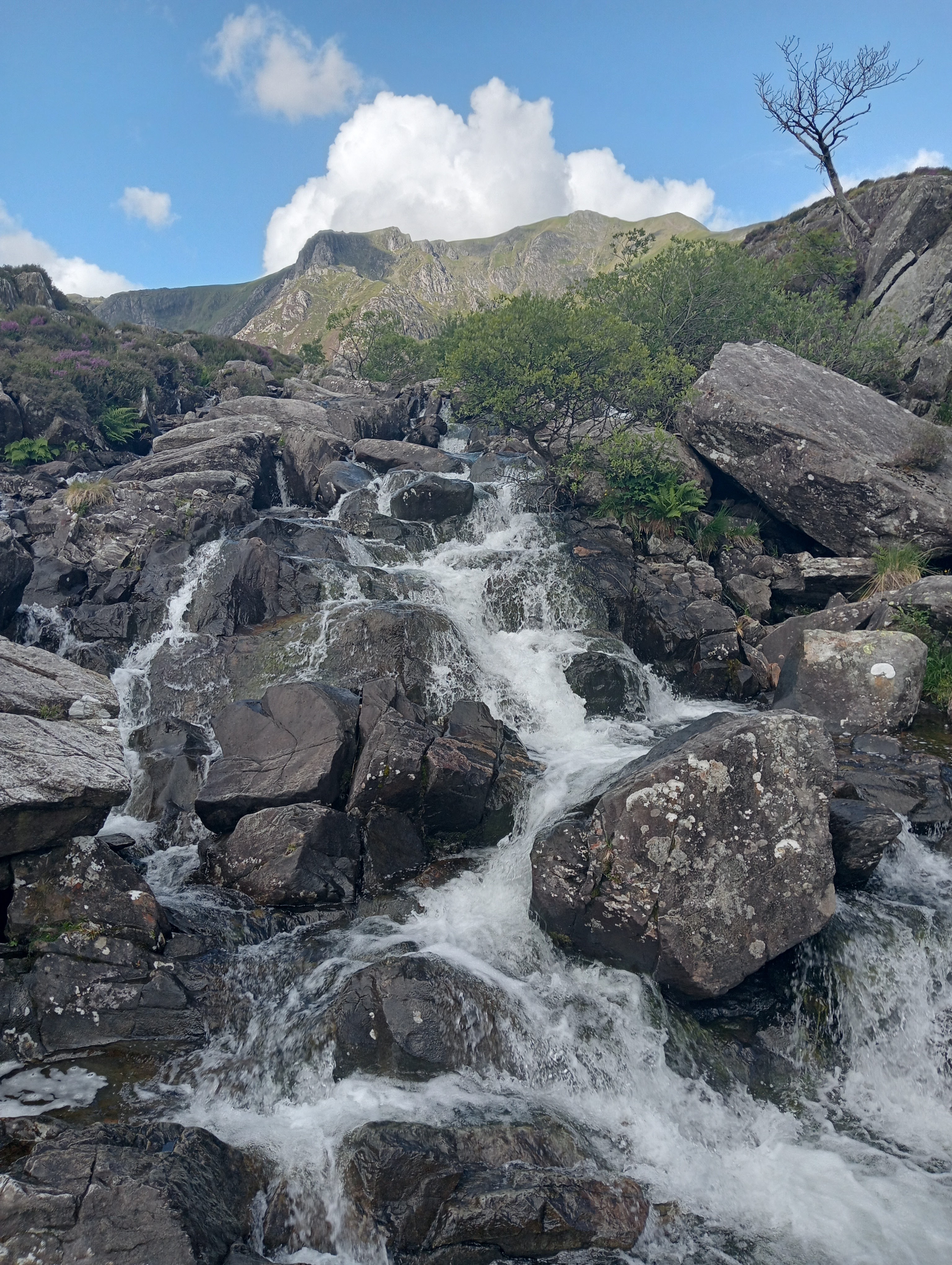
Llyn Idwal approach photographed by myself July 2023. Not related to the post really but just a beautiful waterfall in North Wales

I submit to nycmidnight.com competitions regularly. They aren’t cheap to enter but each piece of work submitted is critiqued by three different people whether you get placed in the competition or not. But much as I loved doing this and would read the critiquing very rarely did I do anything with it until this time.

Here is the piece in the origin and then with my revisions. It’s never too late for revenge. Maybe it was because I was a runner up this time I did something with it.

Anyway this got me thinking about life etc. How often do we put ourselves out there to ask for advise, for support, for how to do something better, and then don’t do something with it? Even if we get unsolicited advice how often do we ignore that? I was even pondering on the times we’ve gone for paid counseling, paid life coaching, paid gym membership, etc, etc and then ignore the instructions, directions, suggestions. It may not be for you but it is definitely loads and loads for me.

Why?

Well with the writing I know it was because it takes time. It means going back and redoing rather than just producing more writing. A new project is more fun than looking over an old project and finding what could be improved.

I have to say with myself the more I’ve done work with QEC the more I’ve been able to listen to others, to not get hurt when I hear advise that I am not sure I like. I was chatting with my QEC practitioner about this and she thought it was that as we deal with the issues from our childhood that it is easier to listen to others and weigh up what we need to change, need to alter, need to think about, whereas with all those layers of childhood survival techniques in place we could fully hear/feel/know. As opposed to either thinking we should do all that we are told or nothing.

I’ve had an incident at work where I know that my old gut reaction would one of the following; to leave because why should I stay if they don’t value me; be super super nice and people pleasing so they wouldn’t sack me; spend loads of time feeling awful that I did that and beating myself up about it; and maybe even thinking “how dare they speak to me when I am older than they are?”. Instead I listened to what my manager said, saw my errors, said sorry, we were also able to talk about how it wasn’t totally my fault and that there were things needed ironing out in this area. Together we have been able to put together a plan that works for who I am and the situation. I feel fine about going to work and have not spent the weekend stressing about it. In fact it has only come back into my mind when I was thinking through how I could share my flash fiction writing within a blog.

I’ve been able to listen clearly because a lot of the rubbish that I didn’t even know was there has been cleared away. Maybe though it is also why I was able to read the comments about my flash fiction and see which ones I wanted to take and which ones I did not find helpful. I was even able to put this in the feedback NYCMidnight asked for about the comments.

So I think it is not that we don’t want to take the advice given, or feel we have to do everything we were told. We do but we have so many issues from our past that cause our nervous system to kick in that we don’t fully hear. So my advise to myself is to think about why I get uptight when someone gives me advice, whether unsolicited or asked for, really listen to my heart [that again], see what has made me either fight, flight, fawn or freeze, and get rid of that bug in my system.

Then I can change what I really know needs changing but also not get hurt is someone has misread me totally and doesn’t “see who I truly am”. [That feels like a title for another blog piece soon 🙂

Categories
Bodies Listening

Our Amazing Bodies

Photograph of the highest point on the walk I went on testing my endurance. Taken by Diane Woodrow
Above Abergwyngregan taken by myself 22nd March 2022

I am always amazed at my body when I listen to it. At the point when this photo was taken my heart was pumping and my breath was ragged. But that is to be expected.

I had chosen this path on a whim, though had had a bit of a look at the map the day beforehand, and I had walked the opposite way with my husband many years ago. But as I was going down the path from this point I noticed the pylons and I was very high above them. I could see the popular path to the waterfalls way below me but things seemed all wrong. So I sat down, got out my phone and tried to work out where I was. I couldn’t get a good signal and started to panic. I was on the top of this mountain surrounded by sheep and thought the path I was on could be wrong. My heart started racing and my stomach cramped and then my legs started to ache. I was at a point where I could convince myself that I could not go on. So I remembered my QEC work, got my autonomic nervous system [ANS] away from fight/flight mode, listened to my heart, put my phone away and continued along the path. This was about 45 minutes into my walk. The path curved left in a while and I went under the pylons and along to the waterfalls and back to my car.. I had been on the right path all along.

But what surprised me most of all was that as soon as I got my ANS calmed and started walking again my legs stopped aching and I did the next 75 minutes of my walk with not an ache. The pain in my legs was due to my fears. Interestingly my sister-in-law says she knows when she is nearing the end of a walk, no matter how long, because her legs start to ache. I know it is often seen as a form of encouragement to say “nearly there” but maybe that makes our bodies start to ache thinking we are nearly there.

I remember years ago when some famous politician’s car was blown up in the tunnel under the Houses of Parliament. One thing he said after was that even though he could not feel his legs he believed that no major blood vessels had been damaged and that he would survive. He said he had seen many young men on the battle field die because they had believed the injuries were fatal when they weren’t. Ok so different to my aching legs from fear that I was on the wrong path but also similar.

Another interesting thing with my body is that from Thursday or Friday I felt short of breath and it stayed with me till Monday. I even did a covid test to check I was negative. As you know from the My Sister post it was 10 years ago that my sister died. Well also 10 years ago a really close friend committed suicide. Eight years ago this same time period my son broke his collar bone playing rugby. Six years ago the same weekend my daughter had a major break up with a boyfriend and I helped her move from London to Cardiff. And then of course 2 years ago this self same time we went into lockdown. It was only when I was catching my breath at the top of yesterday’s climb that I realised over that whole period of last weekend I was holding my breath waiting for something bad to happen. Nothing did so now I can breath again. Again fascinating how my body remembered those incidents and was preparing itself.

I do think too often we are too busy and don’t listen to our bodies. Or we have so many other things piled around us that our heads are making too much noise to be able to really listen. Listening to our bodies takes time. Listening to our bodies means slowing down. Listening to our bodies takes understanding. Listening to our bodies means not judging them. Listening to our bodies means having a sense of awareness. It also means not being afraid to look back and ask “what happened then?”

I know this is a question I keep asking but – are we willing to slow down and really listen? to ourselves and also to the world around us?