Categories
chaos freedom

Psalm Sunday

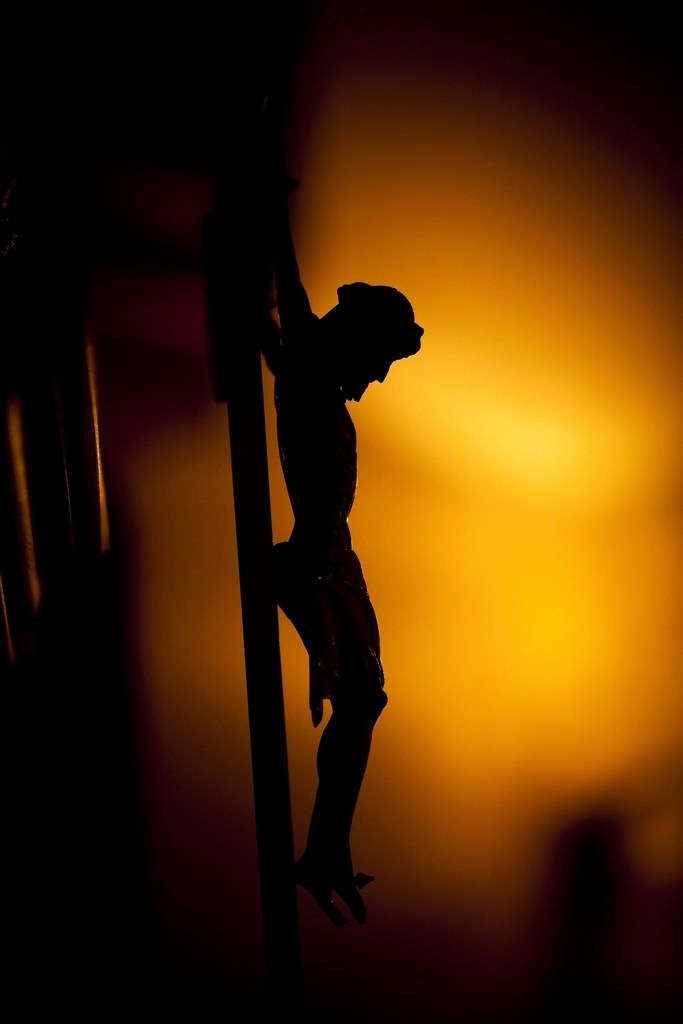
Today at church we were pondering Psalm Sunday. After I had given a talk at youth group last Sunday about how Jesus turned his friends and followers heads regarding the Passover at the Last Supper he shared with his friends. I ended it by saying how we have to be careful not to get caught in just going through the motions with our services. So I thought I ought to be listening today for a new revelation.

Firstly, as we know as Jesus came in through one gate into Jerusalem Pontius Pilate and the might of the Roman army came in through the other. The Romans were expecting trouble. They knew about Jesus. They knew something was going on. They would have heard the followers cheering and shouting because the city wasn’t as big as our cities. It was probably the size of a small town. But also as we realise at Jesus’s trial, there had only just been an insurrection led by Barabbas where people had been killed. Probably Romans! So Pilate was prepared. I wonder too if he was miffed because Jesus had attracted the crowd he was expecting?

Roman had come in to take charge. But Jesus had other plans. He was going to let go of there needing to anyone in charge.

One of the questions our preacher this morning asked was “how does one see governments?” and people shouted out the negatives – warmongers, greedy, untrustworthy. But I think we also like government. I think we like the order it brings, how in the good time it brings stability, rules, security, as well as, in Europe schools, hospitals, Police, fire services, etc. We know what to expect from our govenments on the whole, and most of the time here in the Western world we can march [as with the American #nokings marches] and mainly get away without coming to harm.

But what does Jesus bring? Well he brings freedom but with freedom comes choice and choice leaves space for disagreement, for disorder, for chaos, for uncertainty.

To have to forgive each other and ourselves, and God and circumstances, is hard work. It is easier to blame, to pity, to take control. It is why we like our churches to have leaders, to have wardens, to have regular ordered services, to know what to expect and what is going to happen. I don’t think Jesus is like that. As with the Passover supper he goes and does the unexpected – from saying that a specific piece of bread is his body to washing his disciples feet, something a rabbi would never do – he turns things upside down.

Also unconditional love, as well as giving security and confidence to those who grasp it, also leaves the door open to do the unexpected, to give things a shake because we know God loves us even if we make a mistake.

The whole Jesus, unconditional love, forgiveness, I think, can make people feel unsure, confused, and in need of some order they can recognise. I also think that’s why there is so much talk of doing rather than being in Christian circles. It is much easier to search for the right job/ministry/place to live/person to live with etc than it is to step out into the world not knowing where we are going and what we are doing, Yet we can do this when we know we are fully forgiven again and again and again because we are love unconditionally by the Creator of the Whole Universe. It was this Creator who became human to show us how much we are loved and forgiven and to reunite us with these truths of what we were created for; to love and be loved, to forgive and be forgiven.

So let’s start living as free, forgiven, loved people and stop trying to “get it right”.

Categories
crucified passover

When The Sky Turned Black

From Openverse but seems to have come without a credit!

Yesterday at our family-type service we taught on the link between Passover and Communion and then told the story of Good Friday.

I’d done a story type piece about the lead up to the Passover with all the plagues – all the water turning to blood, loads and loads of frog, then loads and loads of gnats followed by flies followed by the Egyptians all getting covered in sores, then covered with boils, then there was a plague of locusts, followed by the daytime turning pitch dark. [Exodus 7-11]

As we were all watching the Lego version of the Crucifixion I had thought.

Jesus is crucified and when the sky goes dark he is recorded of crying out “My God, My God, why have you forsaken me?” [Matthew 27:46].

Common teaching is that Jesus was in so much pain that he felt God had forsaken him. Or that God couldn’t look on what was happening to Jesus and so God did look away. Or that because Jesus was carrying the sins of the world God looked away because they couldn’t look on all that sin. But what if it was connected to the Passover?

In Exodus 10:21-23 if says that God would cover the land of the Egyptians with a darkness so thick they couldn’t see each other but that there would be light where the Israelite’s lived. It was after these three days of darkness that the whole Passover happens with the blood on the lintels and the Angel of death taking the firstborn of all those who didn’t have faith in the blood of the lamb.

At this pivotal moment of what we now know as Holy Week God makes all the sky turn dark and it stays that way for three hours [Matthew 27:45]

We will never know for sure if Jesus really did say these words or something similar. Or maybe they were added by Matthew for part of the narrative he wanted his readers to hold on to. By using these words the Jewish reader will be remembering the Passover story. It is said that Matthew was writing for a Jewish readership. It would remind them that after the sky turned black the lamb was killed and it was the blood of that lamb that brought their salvation from slavery in Egypt.

But here was an even bigger release from an even bigger slavery – from those things within us that keep us from knowing we are loved by the Creator of the Universe, that we are forgiven and that we can trust even when the sky turns black.

We are not forsaken no matter what happens around us.

Categories
psalm trust

All About Trust

Those who know you, LORD, will trust you;

Psalm 9 shared by Bible Society’s Lent readings

Renly and Willow assisting with my writing!!

I have noticed the more our new rescue dog, Willow, hangs out with us the more she trusts us. But it isn’t just that. The more she hangs out with our old dog Renly, the better they get on with each other. We are all getting to know each other and learning to trust each other.

With Willow too, the more often we go round the park the more she gets to know it and the regular people and dogs who walk there and so the more she is comfortable and trusting there. There is also the thing that the more she trusts me on a walk the more she trusts where I take her.

It is the same with God. The more we hang out with God the more we learn to trust God and the safer we are. I can’t remember who it was, maybe Henri Nouwen, who said that we need to get to know God in the calm times of our lives then we can trust God in the rough times.

Fourteen years ago now we went through a very tempestuous time and I know if I hadn’t built up my hanging out time with God before then, spent time devouring my Bible, praying, worshiping, reading about God, then I know I would not have been able to trust God during that time. Like Willow I build up my “hanging out getting to know God” time and knew then that I was safe with God wherever.

Again it is not about throwing requests at God, not about being busy doing things with God, but it is hanging out with God and just “doing life” with God, which is how the trust is built up.

[Though back on the Willow front – it is now 4.30pm and she still doesn’t quite trust that I will remember to feed her and Renly, which just goes to show we all need to work on trust 🙂 ]

Categories
delight desire

Do You Know The Desire Of Your Heart

and how often do you sit calmly for long enough to listen? Or can you only really hear your heart’s desires if you are delighting in God?

Aber Falls footpath March 2016

According to Googlephotos it was ten years ago today that we first walked to Aber Falls. This was a side path so we took it. That’s what we were like back then when Renly was only 4 years old and could walk for miles and miles and miles. Interestingly we’ve not walked this path since that day. Some of that is because Natural Resources Wales have been doing a major replanting scheme so the fir trees that were beyond this path have been removed and new native to the area trees are being replanted.

This morning I was reading Psalm 37 as part of the Bible Society’s Lent readings for today and this verse jumped out at me

Take delight in the LORD,
     and he will give you the desires of your heart.

What struck me was – how many of us really know the desires of our hearts? And how many of us stick to a plan we got 10, 15, 20, 40, etc years ago and keep trying to get there even though we have changed massively since then? This is why I’ve used the above picture. Only ten years ago our dog could walk miles and now, much as he enjoys his walks, he is much slower and cannot walk as far. But also this piece of land looked like it was going to be conifer trees forever but now there are struggling beeches and ash, as a more native forest is re-established. The desires and plans have changed both for my dog and this piece of land.

We moved here 10 years ago. Back then my desire was to run our house as an Airbnb house, offering hospitality to low-budget travellers. Even before Covid the ethos of Airbnb travellers was changing and I was thinking of stopping. The desire of my heart had changed. Also a around that time I was doing lots of work with children and teens around Creative Writing but again my desires have changed.

Though in both my “desires” it was Covid and Lockdown that accentuated my need to relook at my heart and what it really wanted. And as my regular blog readers know I have done a lot of QEC healing since Covid too.

My heart has changed. My desires have changed. My circumstances have changed. My energy levels have changed. So much has changed that I cannot expect to keep slogging on with what I believed my heart wanted back then. I am always changing and always evolving.

I was emailing with someone the other day about relationships and of how hard marriage is because we are in to for a very very long time and yet we are not the same people who got married back then, and neither are our spouses. We have changed. We have evolved. Circumstances have changed us. Circumstances are often a driving force for changing the desires of our hearts.

So back to the verse – I think there is a connection too. I think the psalmist is saying that it is as we delight in the Lord that we learn what the desires of our heart are. Not what we think they ought to be, or what we think they should be, or what we think would please others, but what we really really really desire deep down inside. And I do think we need to do loads of healing to get beyond the “good girl/good boy” scenario and the people pleasing, or the “what would look good to others/friends/family”.

But I honestly believe as we hang out with God, delighting in God, delighting in the fact that we are forgiven, delighting that we are loved unconditionally, and that if we mess up on those desires we can pick ourselves up and start again and that the Creator of the Universe will still be by our side. But we have to give this time. We can’t fit it in around other things. It has to be a part of all that we do, all day, every day. Back to what the Apostle Paul calls “praying continuously”. That’s just hanging out with God and delighting in them, not mithering at them to change things. A bit like something I talk about with my writing group – of not striving but of allowing things to ponder, to touch those Alpha waves, those Eureka moments – all of which come when we are delighting in something not striving to get an answer.

This verse isn’t about telling God what we want them to do but is about being with them and enjoying them. Delighting in them.

It is ok for our desires to change and change and even change back again but if we delight in the Lord then we can step out with confidence and do what will make us glow with joy and peace.

Categories
forgiveness trust

It Should Be This Easy

I’ve just been reading Butter by Asako Yuzuki translated from the Japanese to English by Polly Barton. It is much more than a book about a serial killer and food. It is a book about misogyny supported by other women, about finding one’s true self, of breaking with the norm; a coming of age book but by someone in their 30s.

But the page I am going to share comes towards the end and it is when Rika’s best friend takes her to an end of Ramadam meal put on to help Japanese people learn about Turkish culture.

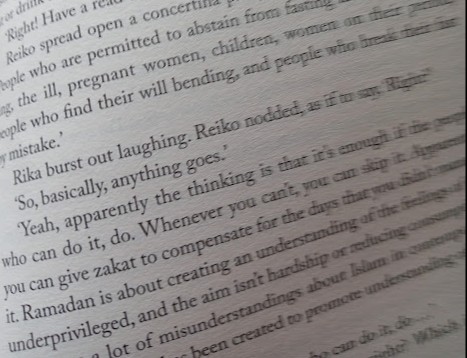
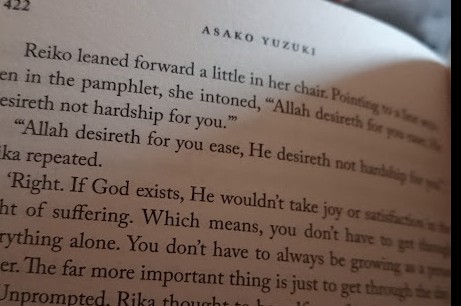
It is these two pages where the women read from the pamphlet that stuck me

I’m not sure how well you can read it – maybe photographing pages from a book and editing them with a small dog sleeping in the crook of my arm isn’t the best way of doing it but …. well here it is.

I wasn’t sure where to go with these when I thought of this post last night but knew I wanted to share but then this morning the Vicar I work with phoned me up for a chat about a couple of people we know but then we moved on it trusting God and the importance of knowing one is forgiven and how there are many Christians who don’t fully believe that. As we said this hinders them not just in their Christian walk but in how others perceive Christianity to be.

Now I know this pamphlet the women are reading is about Islam but I think this is what God is like in Christianity too. But like way too many religions how we out work the love of God become a rule rather than a love based.

I’ve missed it off that first page but it is when Rika says “…It is enough if the people who can do it do it ….”

And then on the following page Reiko says,

“… God … won’t take joy or satisfaction in the sight of suffering. Which means, you don’t have to go through everything alone. You don’t have to always be growing as a person. The far more important thing is to just get through every day.”

This is what, I feel, we need to keep remembering as Christians. Firstly that God loves and forgives us, that God doesn’t take joy in our suffering, that we need to remember that God is with us so we don’t have to go it alone. Also that God has put precious friends in our way too so it isn’t just us and God, but us and God and our friends, family, those who support and encourage us with no string attached.

Too often in Churches we see rules – of having to go, of having to be involved, of having to be a part of, of having to pray, of even having to be nice to people, and of having to “grow” in God – when, especially after reading this, I think God wants us just to get through every day – and if possible in peace and knowing we are loved and forgiven.

And as happened with the unexpected phone call, God so often has some unexpected plan to help us on our journey if we are willing to stop striving and be willing to let God lead us – which only comes through trusting and believing.

Categories
Esther Purim

Purim

If you don’t know the story then read the whole book of Esther, an amazing woman who stood up to a mighty king and saved her people.

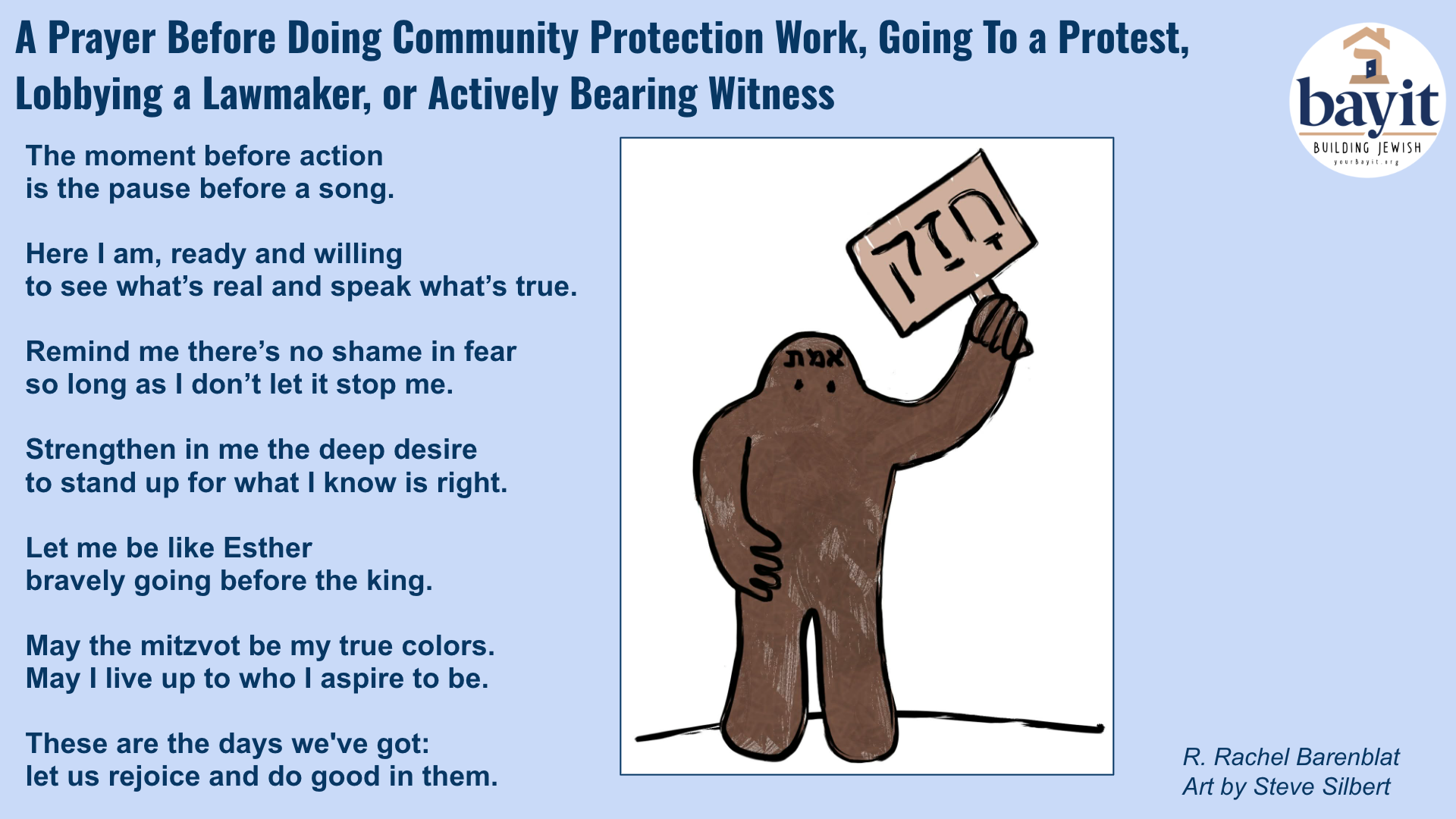
Taken from the Velveteen Rabbi, a female rabbi I’ve been following for years who gives a great insight into my tradition and where its roots are. New Work for Purim

Yesterday at church we talked about the Temptations of Jesus but also talked a lot about things we’d given up, or taken up, for Lent – that Christian tradition which remembers Jesus time in wilderness and leads us up to Easter and used to be a time of fasting but now we cheat and do thinks like just give up chocolate, or going on Facebook, or drinking alcohol, or swearing, or take up something that seems noble!

As a child I used to get really confused that Jesus spent 40 days in the wilderness and was only out for a week or so before he was crucified.

But whilst Christians are thinking of fast, or side-tracking real fasting and giving up something, the Jewish community has the festival of Purim where there is wild partying and celebrating because God saved his people from destruction via an obedient and very brave young woman who was chosen by the Persian despot Xerxes for sex purposes. The Persians ruled over the known world with a huge empire that, like the Romans, treated anyone outside the elite like they were subhuman. Xerxes has got rid of his Queen because she didn’t do as he said and then got all the beautiful virgins [teenage girls] from across his kingdom, who were then prepared for one night with him. One night where he would rape them and if he liked what he got he might have them back but if not they were defiled and put in his harem for the rest of their lives! Esther was raped by him but apparently he liked what he got and so she was invited back. She was so brave to go before him because she could have been killed but she is clever as well as beautiful and manages, though very clever means, to save the Jewish people from destruction. [Read the story]

Lots of this sounds very familiar to what we are hearing in the news at the moment – powerful rich men who choose innocent young women, rape them and then discard them, and also don’t own up to their wicked deeds.

But what I wanted to share – before I went off on a rant – was that we need to look at what Rachel says in the top image; of stepping out, of realising these are the only days we have and we need to do right in them, of showing our true colours.

I wonder if, as Christians, it might be time to use Lent to stand up and be counted, to stand before kings, before leaders, to stand up for the oppressed, to really shout “your kingdom come, your will be done” and stop all this shimmy shamming and pretence of “aren’t I good to give up chocolate/learn a psalm every day/etc”.

My prayer for myself today from the above is “strengthen in me the deep desire to stand up for what is right”.

These posts are free but you are welcome to Buy Me a Coffee or similar

Categories
big three Temptations

Temptations

https://bible.art/gallery/matthew-11:15

I’ve been looking at the Temptations of Jesus for this week’s youth group. I know them off by heart but once again I got a revelation. I feel as if God has shown me what they mean to us all personally.

[The quotes are the bits I’m going to share with my youth group later]

First temptation – turning stones into bread. I think this is where we try to do good things for people that will feed and sustain them but we don’t acknowledge Jesus in what we do. The world is filled with people who do amazing things for other people but often don’t touch their spiritual needs, those deep heart felt things. They are “fed” but not nourished.

taking something hard, like a stone, making it palatable, making it something that will feed the body, but not making it something that will nourish the soul

The second one is about God rescuing no matter what. This got me thinking of things I read recently about how when we pray we expect God will heal, give us a what we have asked for, etc and yet when it doesn’t happen we often ask “where is God?” or “perhaps I didn’t pray enough” Yet Jesus says “Do not put the Lord your God to the test”.

Yes we should pray all the time. Yes we should cast our burdens on to Jesus at all times. Yes we should ask for things. But I do not think that we should expect all things. Too often I know I have thought “if I pray for this person and they get healed then they will want to follow God” or even I have not told them I’m praying for them in case God doesn’t heal them and then what!!! I now truly believe that more often than not God is doing things within our hearts rather than our circumstances.

Always ask God but do not expect God to do something that would make people follow God. Don’t test God!

And that third one about bowing down to worship the devil. I do love the audacity of the devil in this story. Fancy asking the Son of God, part of the whole Trinity/Godhead, to bow down and worship you. Remember the devil totally knows who Jesus is.

But how often do we try to get people to admire, like and maybe not worship us but look to us in a special way that they don’t to someone else; how we love it when someone picks us out. It is seen clearly in social media with celebrities, of that whole 5 minutes of fame, of wanting to be respected, set apart from others. I must be honest and say I get a buzz when the young people I work with call me their “youth leader” or the ones in my writing group say something amazing about me.

Yes people should be given the respect, honour, credence and admiration they deserve but that cannot come from short cuts but must from who they truly are. Too many of our world leaders, major and minor leaders, see themselves as beyond reproach and want to be served and worship without putting in the grunt work to get there.

This is also the temptation Jesus where gets sharp with the devil and banishes him. I wonder if that is because this one is the most subtle and the most appealing? I wonder if Jesus, especially as he knew what his own ending on earth would be, found this one the most tempting and so went for banishing rather than engaging in debate with? And also I wonder if that is why, after this temptation, the angels came down and ministered to him? They could have come at any other point – popped in, ministered a bit then popped out again – but no they wait until this final biggie. This final most subtle one!

know who you are and be wise and humble enough not to take short cuts

I also wonder if these are the BIG THREE that really contain all the other temptations – doing good thingsso we’re noticed and liked; trying to show God in a good light rather than trusting God to be God; and wanting to take short cuts to be honoured and admired? Perhaps that’s why no others are mentioned?

These posts are free but you are welcome to Buy Me a Coffee or similar

[Sorry if this is a bit disjointed. Next door’s dogs keep barking in their hallway so the sound is like it is in our house and the wild Willow child is rampaging between leaping on my lap to tell me all about it and rushing round the house trying to find the dogs and fight them. Chaos this morning!!!!]

Willow in the park a few days ago tidying up the ducks and moorhens back into the pond. Thankfully she doesn’t jump in!!!

Categories
lent temple

Where to meditate?

One of many churches in Florence. Photographed by myself April 2014

Within your temple, O God, 
    we meditate on your unfailing love.

from Psalm 48

Where is God’s temple? Well Paul tells us in 1 Corinthians 6 that are bodies are temples of the Holy Spirit so where can we meditate on God’s unfailing love? By looking within ourselves. We are God’s temples. We can mediate within ourselves, which is how we can be praying all the time and in all circumstances. We don’t need to go to a church – though being part of a life-giving congregation is brilliant. We can be with God pondering God’s unfailing love wherever we are because we are God’s temple.

Amazing!

[Got this revelation this morning whilst reading Bible Society’s Lent meditations and just had to share. Hopefully there will be many more to come!]

Categories
creation enjoying

Creation Sunday

Yesterday I asked my youth group a question based around the idea that God made the whole world and gave it to humankind …

If you gave someone something you had made how would you like them to treat it/to be with it?

My favourite, and most thought provoking comment was “to enjoy it”.

Too often we think enjoying our planet is to go and do some recreational activity in some unspoilt place; a way of using our spare time is to “enjoy” the world. But when you think it through this whole idea of mass leisure time is very recent. For many years humans were busy just dealing with surviving. So you couldn’t take a day off to go for a hike or hang out in the garden and read a book because you had to provide food for the family, or you worked in service and maybe you got Sunday morning off, but that was to go to church. Then you’d be back taking care of the family you worked for. This whole idea of a day off for most people is a new thing.

But I’m suspecting God didn’t just wait for the late 20th and 21st century for people to enjoy their creation. I am suspecting God wanted humankind to always be enjoying creation.

On Thursday we went to see Our Town with Michael Sheen in it [a must if you are able to] and two lines towards the end of the play stand out for me and fit in with this whole thing of enjoying creation just for what it is. Both are from Emily who has died in childbirth aged 26 – something that was not uncommon when the play was written in 1938

“Oh Earth, you’re too wonderful for anybody to realize you”

and then as she realizes how little people appreciate the simple activities of life

“It goes so fast. We don’t have time to look at one another.”

We need to slow down, to really look at each other, to really look at enjoy our Earth.

The Creation poem ends by saying that God gives all their amazing creation to humankind to fill, to subdue, to care for – and also, as the young girl my youth group said – to enjoy.

So let’s not wait till our next day off – when too often we are rushing round “having to do things” and trying to fit in “quality leisure” – and take a moment to slow things down, to really see, and to really enjoy.

These posts are free but you are welcome to Buy Me a Coffee or similar

Categories
Magi surrender

Wise People’s Gifts

I’ve been looking at different thoughts and things around those wisemen that came to visit Jesus and their gifts. What if those gifts don’t represent what we’ve always been told they represent. There is nothing in the Bible that says why they gave the gifts, it just says

On coming to the house, they saw the child with his mother Mary, and they bowed down and worshiped him. Then they opened their treasures and presented him with gifts of gold, frankincense and myrrh.

Matthew 2:11

Then they go home again a different way.

So what if GOLD, to these wisemen, represents their worldly wealth? What if they prophetically looked at this baby and were willing to trust all their worldly wealth, all their earning power to Jesus? These wisemen must have been rich because they travel from Persia to Judea and Herod welcomed them as equals – and he was a proud, image-focused human. These wisemen could afford to take time off of making money to journey for weeks with an entourage – not just the 3 of them that we see on on Christmas cards – but a whole entourage of baggage, of guards, of food, of water [yup you need lots of water to cross a dessert] It says too that they “open their treasures” not that they just slid over a few presents. But they looked in their treasure chests and they decide from there what to give. That took a camel or two of its own to carry plus guards so they weren’t robbed.

So maybe Gold represents trusting God from now on for earnings, for wealth, for the financial security that gold, that jobs, that money brings to us all.

I wonder if FRANKINCENSE represents one of the tools of their trade. These were astrologers, star gazers, fortune tellers. A lot of the people I know who tell fortunes, who do divining, and those sort of things use incenses in many ways – to help with the atmosphere, to help calm, to help even open a portal to another dimension. What if these wisemen were giving this gift to Jesus because they were saying that they no longer needed to create an atmosphere by altering states of mind, they didn’t need to even keep the illusions of their trade up any more? Maybe they were handing the tools of their trade over to Jesus and trusting that God would do whatever with their skills and talents.

Now to MYRRH which we’ve always been told they gave to Jesus foretell his death. Myrrh is an embalmer. They were also a wealthy class of people living in a culture where tombs were built and prepared long before the recipient died, and generally orchestrated by the person who was going to be buried in there. The living person was keeping control of their death and afterlife!! What if they gave myrrh to Jesus because they were saying that their death – the timing, the manner, how they were buried – was no longer in their hands, that they no longer had control over it. That as they had given over control of their wealth, their earnings, their trade to the living God so they were giving control of their death to God.

Maybe all three gifts were to show that, rich and important as they were, they were letting of all that and giving it into the hands of this baby who they knew, through their prophetic eyes, was God Incarnate – someone they could trust not just with their lives but with their deaths?