Categories
character of God New Season

What do you see as the characteristics of God’s new world? 

First published on Godspacelight on 4th May 2024
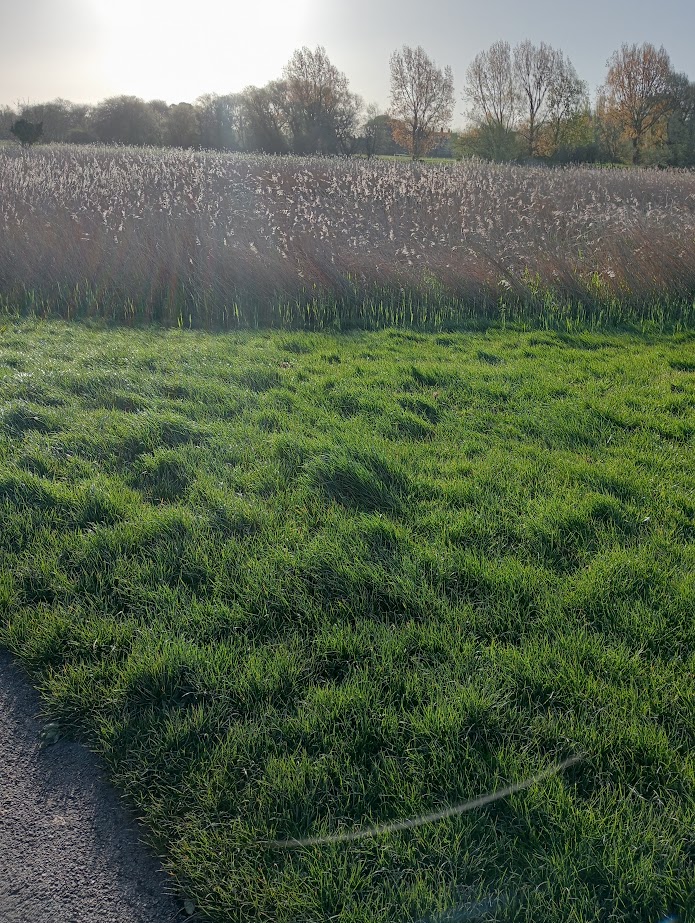
my local park first thing in the morning – photographed by myself April 2024

This question of Christine Sine’s about seeing the character of God in this new season challenged me after a walk around the park with my morning dog walking crew where we discussed all things from the wars in Ukraine and Gaza to climate change to Amazon deliveries and watched the Little Egrets making out on the pond. 

This is our new world – of distant wars and long mild wet winters, of excitement at the return of birds to our area and the latest series on Amazon Prime. All of it is a new world. It isn’t being a grumpy old woman to say that “things weren’t like this in my day”. Yes there were distant wars and even here in the UK we had the Falkland wars and the civil war in Ireland, and the winters weren’t all snow to play in and summers of gentle golden days. I protested about nuclear weapons and looked for a more sustainable way of life even then. But the difference in this new world is that all of the things that are going on are fed into our pockets via our phones each day. Big Brother watching you is not a sci-fi wonder but we’ve all had adverts appear on our various social media feeds after we’ve had a conversation about those things. Our data is being gathered in a way it never was before. 

We now see our politicians in all their guises. Although mainly the news outlets like to show us the worst of them, show us their faults and not their strengths. Though this was known before this new world of ours makes it instant and hard to miss. 

So what are God’s characteristics in this new world? Not just this world of emerging spring but this world of emerging surveillance technology and instant information; when if I’m not sure of something I just google it. Where is God in all of this? 

For most of us we will see God in the Egrets mating and the sunrise, as well as in the random groupings of friendships on the park and elsewhere. But I believe God is also in the emerging technologies and even in the constant media streams. But we need to step back, as we would have had to do with God in previous ages, and breath the Spirit of God in. 

God has been easy to find or a rapid quick fix for our lives. God has always only ever ask for our hearts and not our deeds. 

So for me in this age of new world/new season I think God’s characteristics haven’t change. God is unchangeable, always with us, always waiting for us to look to them. God wants us to know and love ourselves so we can open up and let God love and look after us fully. 

So as my friends pontificate on issues micro and macro I see God in them, in their concerns and their humour, in the joy we have of being together, in the fear that are expressed and the longings that slip out. I do see God in the opening blossom and the shafts of sunlight and the mating egrets but I do see so much of God in my dog walking crew. 

Categories
death Shrines

Roadside Shrines

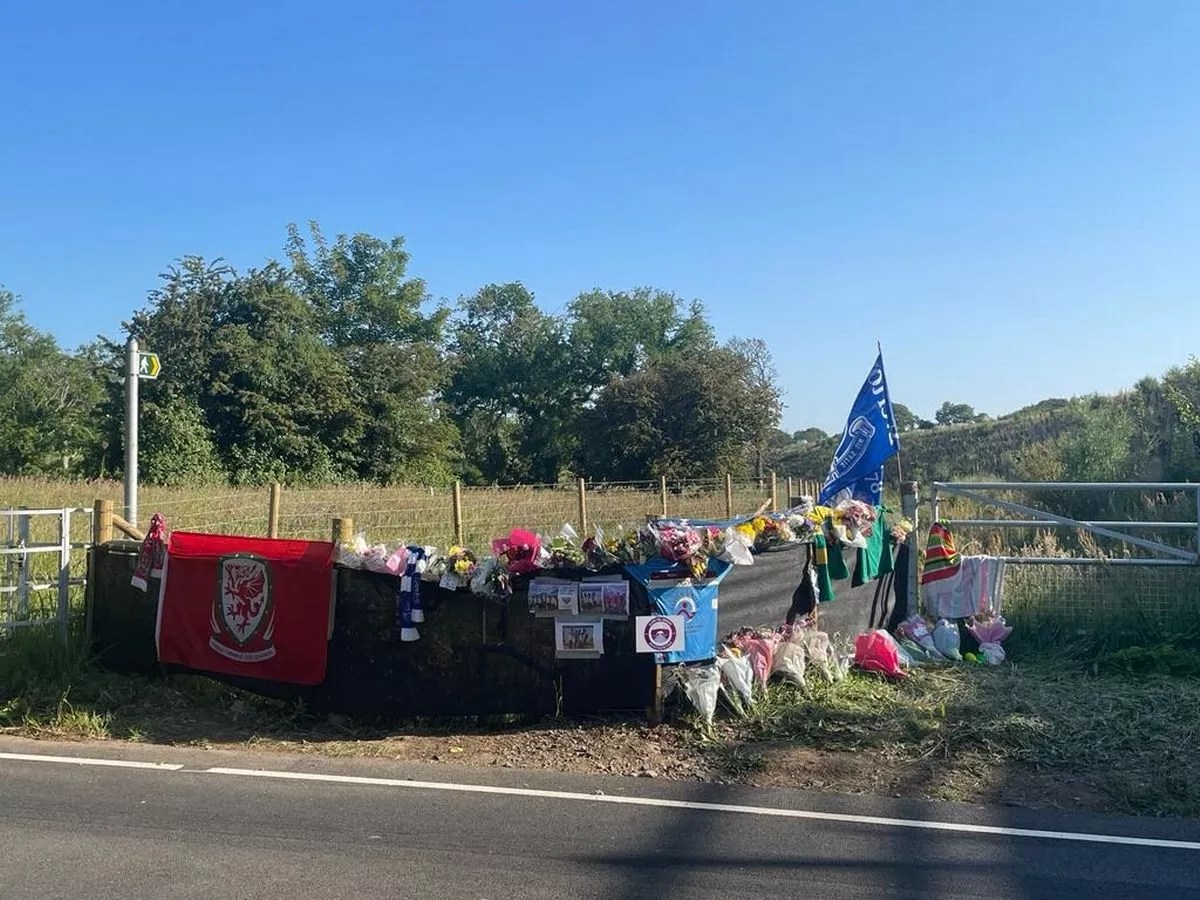
A collage of Greek roadside shrines www.amusingplanet.com, an Irish roadside shrine https://catholicgadfly.blogspot.com/2012/06/catholic-marian-roadside-shrines.html, and a memorial on roadside in North Wales www.dailypost.co.uk

I could have added more – the Dunblane school shooting of 1996, the UKs only school shooting thankfully, or the floral tributes for Princess Diana back in 1997, and the many tributes that are now found in the UK on roadsides, beaches, and other public places.

The first time I saw a roadside shrine was when I visited the South of Ireland in 1980. There were not things like that in mainland Britain at that time. The next time was when I was in Greece in 1987. That was quite scary because I had hitched a lift in a truck carrying potatoes across the mountains of Pelaponese. The truck was speeding along and the driver was pointing these small shrines out and telling me in broken English that this is where people had died and of how their families would come to pray leave flowers, light candles, leave trinkets and pray for their souls. Well I must say it got me praying that I would not join them.

When I first got to really know God in 1992 the small charismatic Christian group I was part of said these shrines were Catholic or Greek Orthodox superstitions and that one did not pray to ones deceased family or friends once they had died. Dead was dead so to speak. At the time I hadn’t really lost anyone I was close to so I just accepted their word for it. So even though I found these shrines beautiful, moving and fascinating I allowed myself to dismiss them as superstitious nonsense like the good newbie Christian I was!

Then came the school shooting in 1996 where people from across the country, myself included, were sending flowers to be laid outside the gates of the school. I don’t know why other people did it but I did it because my son was of a similar age and at a school whose building looked similar. It was my way of expressing my grief and solidarity.

Princess Diana’s death followed close of the heels of the school shooting and the streets of not just London or the place she died but across the country were littered with flowers. I did not get involved with that, probably because it did not have the same effect on me as the school shooting.

Now it is not uncommon to see wilting flowers on the side of the road or on a park bench. Or like the above picture which shows the boy’s football shirt plus flowers, photographs, etc. Especially when grief is fresh this is what people need to do. They need to find a place where they can show their grief.

My pondering is – why have things changed so much? It is like that stiff upper-lipped Britishness of holding everything in is morphing into a more open Mediterranean show of emotion. Death is no longer something that is hidden behind somber church services and quiet tears. There is no longer the embarrassment of showing emotion.

I feel too as if we are moving away church involvement in death and so we need these places to focus our grief. Now. for whatever reason, a funeral can be up to a month after the death of someone. In the case of a roadside trauma it can be months or even over a year until the inquest can come to a conclusion as to what happened. Until there can be closure.

When theses roadside expressions of loss and grief started to appear on roadsides I found it odd and wanted to look away. Though in both Ireland and Greece I enjoyed looking. Perhaps for me it was that here, in a place I knew, someone was saying “look someone I loved died here” and that frightened me of my own mortality. I don’t know. But now I say a prayer as I go past for the person who has died and all the family and friends they leave behind.

Perhaps also as we go for more natural burials and more cremations and there are less and less gravestones we need a focus not just for our grief but for the grief of our fellow human beings?

Categories
Biblical Cultural Diversity

21st May – World Cultural Diversity Day

This post first appeared on Godspacelight.com on 20th May 2023

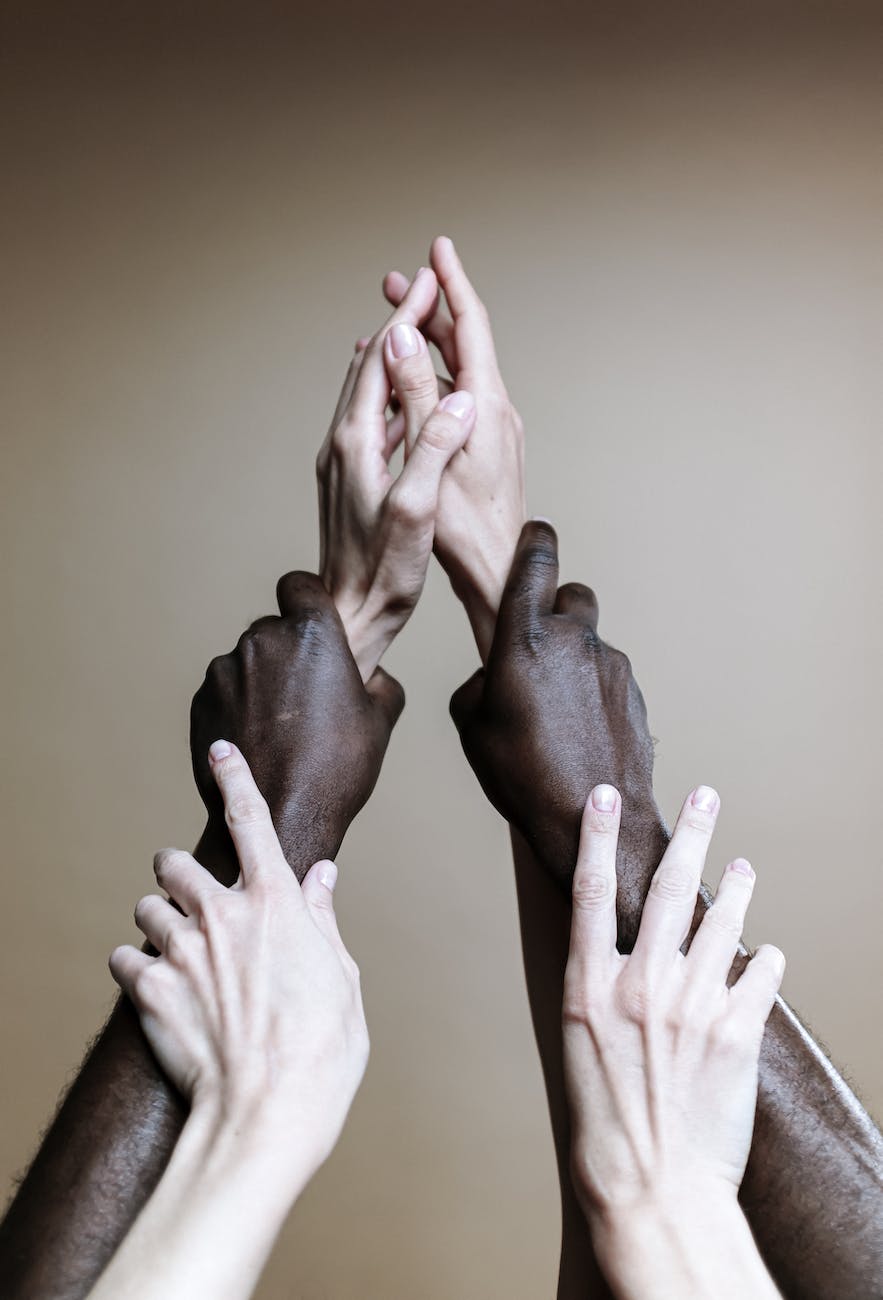
Photo by cottonbro studio on Pexels.com

Interestingly in planning for this something else popped up and I wrote a piece around King Charles’ coronation to do with cultural diversity. As a good detective says “there’s no such thing as coincidences” and my QEC practitioner is always saying how things come up for a reason that we need to explore. 

So what does come to mind when we talk about “cultural diversity”? What picture/image comes to mind?  And what does cultural diversity look like? 

Meaning according to https://www.dictionary.com/ 

  • the cultural variety and cultural differences that exist in the world, a society, or an institution: Dying languages and urbanization are threats to cultural diversity.
  • the inclusion of diverse people in a group or organization: to embrace cultural diversity in the workplace.

The Modern Cockney Festival looks at how the culture of Cockneys, which was originally a word used for those born within the sound of Bow Bells in London, has morphed and changed and come to embrace all those who feel they can relate to some of the cockney traditions. There are other events like this that are for people who feel they relate to those traditions, cultures or similar, that at one time certain races, genders or creeds may not have. 

There are differences in cultures that we need to recognise, honour and celebrate and I believe we are getting better and better are recognising the big differences, but what about the more subtle ones? 

I live in North Wales and when we moved here we did think that the only differences were between Welsh and English, but the longer we’ve lived here and the more people we have come to know we have found that there are much more subtleties within the land than we originally envisaged. Many of which can get lost within the bigger picture. We’ve had both Anglican church parish boundaries and electoral boundaries changed recently due to population density. But there is a major cultural difference between those who live on the coast and those who live in hills, those who live nearer the English border and those who live on the Western reaches, those who live in the large towns and those who live in isolated villages. Within a population of just over three million people there is a great range of diversities. 

I lived in Belfast in 1996-7 which gave me a feel there for the cultural diversity of the city and the surrounding countryside. I got to know people who were Protestant and Catholic, Unionist and Loyalist, who had moved to the city from a village where everyone knew each other and those who lived in the city but also knew each other. Belfast in the mid 1990s was like no city I’ve ever lived in before. I cannot comment about the rest of Northern Ireland because I never made it over to Londonderry or into the hinterland. The population of Northern Ireland is less than two million and yet so diverse. 

Having lived in both these places I have seen how especially government or media do not honour the diversity of these nations but make judgement calls about what they need as a whole, what they want as a whole, and even what these people think as a whole. There is no space for different wants and needs. 

I know too that I am guilty of this with Native American tribes, with people who live in India, Asia, and all those myriad of countries I have never visited and never had the time to really get to know. Yet Revelation 7:9 says 

After this I looked, and there before me was a great multitude that no one could count, from EVERY nation, tribe, people and language, standing before the throne and before the Lamb. They were wearing white robes and were holding palm branches in their hands 

I think the reason the bible says “multitude” is because then no one can give an exact figure. I think this is because God understands and knows each different group of people however big or small, however diverse, and is going to make sure they are fully represented in heaven. 

Note the word EVERY in there. Not most, not a few of, not even the majority, but EVERY nation, tribe, people and language will be there whether here on earth they have been recognised at all. 

I believe that we need to stop lumping people into easier to handle homogeneous groups believing we know what they want or need or think but we all need to start listening to, talking to and really finding out how we can all fit together but still stay cultural diverse. 

I think we also all need to be true to our own cultural diversity and who we fit with. I’m working with people who are between 15 and 40 years younger than me. Even those who are 15 years younger than me are of a different generation, have different values, different tastes, remember different music and TV programs. I have to accept that even though I am friends with them I also have a different culture that I relate to and fit comfortably into. 

I do think too often we try to find a homogeneous whole that we can fit into instead of enjoying the over laps. There is nothing to be afraid of in being cultural different to someone whether they are in our street, town, workplace, country, or that we never meet at all. God says “EVERY nation, tribe, people and language” will be standing shoulder to shoulder praising. We’re not going to have to conform to a “holy homogeneous huddle” but will be able to enjoy our different hues, words, styles, etc in heaven. Maybe we could start doing it now.  But also realise how much overlap there is.

How many cultural groups do you belong to?