Categories
connecting God

Connected

Connected cobwebs. Photographed by myself Sept 2023

I’ve been reading about the Red Crescent and the Red Cross lurching from disaster to disaster, appealing for donations and funding; Greek fires, Greek floods, dams bursting in Libya causing horrendous flooding, on-going strife in various African countries. And then there’s the fires in the West of the USA, floods in the South-East, on-going drug smuggling in various South American countries. Add in the migrant crisis – fear of those who leave whether from wars, famines, or for economic reasons and the fears of those who live in the countries the migrants are trying to reach. Et cetera, et cetera, et cetera.

But we live in a world that is connected. The whole chaos theory of if something happens in one part of the world it can majorly effect something in another part of the world. The migrant crisis is a prime example of this – wars and famines often in countries we have never heard of affect us here not just with people coming to try to find safety but with commodities too.

So we need to be seeing the bigger picture not just lurch from crisis to crisis, not just try to find resources for X which takes it way from Y, not just giving time this when that means we can’t give to that. We need to know what the big picture is. But, and I know I’ve said this before, we need to slow down. We need to listen, need to really listen – to our world, to God, to stop trying to logically rationalise.

But how?

I think it is by connecting. Connecting with others. Connecting with God. Connecting with the world. When we lurch from one thing to another, one crisis, one trauma, one anxiety, we lose connection. We lose how we fit into the bigger picture.

As I’ve often said I don’t go to regular church any more, but I do feel connected with God and a group of Christian friends, and with the online things that are out there. But last Sunday I went to a church service. It was the sort of thing I like; for all ages but not cheesy; a deep message; time to chat with others about the message and other things; even though it was led by the vicar he did not portray himself as the one with the answers. It did make me realise I do need, occasionally, to connect with others, to hear other people, to think. But also what happened within connecting there was that the things in the all-age service connected into what we were doing in the youth service which followed.

But I think the reason it “worked” was because I did not go along on a superficial level, did not think I was better/more spiritual/more knowledgeable than others – both in the service and in the youth group. But I went along want to connect, wanting to learn, wanting to grow, wanting more than. And because I wanted “more than” I got it.

Going back to thinking about the bigger picture and want to stop lurching from one thing to another – I wonder how often we really want to know more. Whether when we watch the news, see newsfeeds, or even read blogs about all sorts, do we really want to learn, to grow, to get “more than”, or whether we come with our ready made answers that we will then trot out to others whether they want to hear them or not?

I think to connect we need to go in with an attitude of wanting to gain from others as well as give. Then I think we might get a glimpse of the bigger picture of what God is up to in our world.
Categories
connecting mental health

Psychological Privatisation

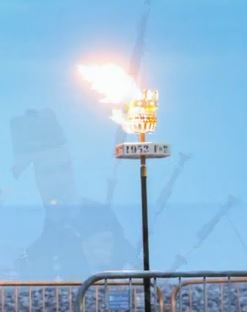
Jubilee Beacon, Pensarn, Conwy

I came across this idea from a Writer’s HQ newsletter and cannot find where to find out much more. This phrase “psychological privatisation” comes from Mark Fisher, who wrote Capitalist Realism: Is There No Alternative?, which I have not read but it is the quote from Goodreads and the paraphrasing from Writers HQ then what happened with the majority of the Jubilee beacons that got me thinking.

Disclaimer – I am not being negative of the Jubilee beacons. I think they were amazing and I loved both the turn out in my town and the whole concept, and the video by George Frost which I have taken this still from. I just think with all these things combined they are saying something about the times we are living in.

So I’ll start with the quote from Mark Fisher that was on Goodreads

“Instead of accepting the vast privatization of stress that has taken place over the last thirty years, we need to ask: how has it become acceptable that so many people, and especially so many young people, are ill? The ‘mental health plague’ in capitalist societies would suggest that, instead of being the only social system that works, capitalism is inherently dysfunctional, and that the cost of it appearing to work is very high.”


https://www.goodreads.com/quotes/9807275-instead-of-accepting-the-vast-privatization-of-stress-that-has

Or as Sarah put it – and I paraphrase the paraphrasing –

Work and life demand too much of us so we are exhausted so we don’t ask our fellow human beings for help, for a better way of doing things. Instead we “try to make ourselves more efficient, push ourselves harder, buy into mindfulness and productivity strategies”, journal more, “and think the problem lies with us and not all the bullshit going on out there.” So we try to be “better” humans, more organised, do more, go faster, earn more, use our leisure time more “wisely”, then all would be fine.

All this stops us being more creative with our solutions and also more connected. It affects our mental health, leaving us more depressed, more anxious, more insular. It also, because we are tired, causes us to accept this crazy status quo and not be able to look for something different. Or even see that this is not working

So then along comes the Jubilee beacons. Now beacons of old were to send messages between communities either to say the enemy was in sight, a monarch was on their way, or as was had a long the North Wales coastline – a series of beacons that said a certain ship had been sighted off the coast of Anglesey and was on its way to Liverpool docks; that it had made a successful crossing. Beacons were for connection and for “passing it onwards.” The ones that happened on 2nd June all did happen at the same time with the same tune played and the same words said. Brilliant. But our little beacon did not see any other beacons and could not be seen by any other beacons. Also once everyone started to go home it was turned off and the burner taken home. There is no residue of a bonfire on our beach, whereas in times past these beacons would be left to burn out so everyone had a chance to see them.

I have a vague memory of lighting Jubilee beacons for the Queen’s 25th Jubilee, but they involved climbing to the top of a hill where the beacons of old were light and then the beacons were light one after the other. It all does happen very quickly.

But I think these beacons this year were a sign of how we are less connected at a deeper level. We are tired after the long pandemic, Brexit, strange election results in this country and the US, a war in Ukraine, the instability of life. Even with regard to the monarchy there is an instability. the Queen is not going to live much longer and then what? We don’t know. And when we try to talk about it we talk without listening.

I think the beacons were a sign. They were wonderfully organised, were efficient, used people’s time “wisely” but actually did not connect one community to another. At least not in a deep, supportive, holistic, “we need to change what we’re doing” sort of way. No trusting each other to “pass it on”.